Welcome!
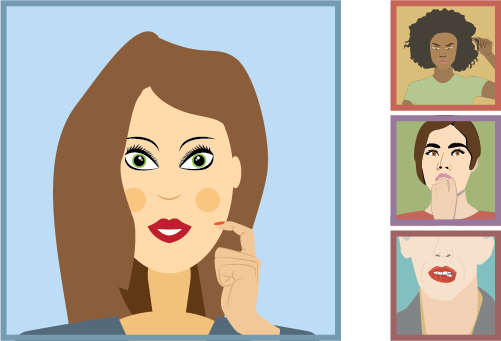
This website offers helpful information about body-focused repetitive behaviors (BFRBs) such as nail biting, trichotillomania (compulsive hair pulling), skin picking (scratching/nibbling of the skin), and lip-cheek biting. We want to provide people affected by BFRBs with scientifically based self-help techniques free of charge. For more information about the effectiveness of the different techniques, please click on the link to Self-Help Techniques.
Although prevalence estimates vary depending on the specific behavior and diagnostic threshold, clinically significant BFRBs are relatively common in the general population (Grant et al., 2020; Grant & Chamberlain, 2020; Houghton et al., 2018; Solley & Turner, 2018). A study by Moritz et al. (2024) found that, across all BFRB subtypes, mild forms occur in more than 90% of the population at some point across the lifespan, with occasional nail biting and skin picking being particularly common. Approximately 10% of the population experiences clinically significant BFRB symptoms associated with distress and visible damage to the skin, hair, or nails , while around 24% experiences more severe forms with visible consequences at least once in their lifetime.
BFRBs often emerge during childhood or adolescence and may persist into adulthood (Lin et al., 2023). Without appropriate treatment, they may follow a chronic or recurrent course and can cause substantial distress and psychosocial impairment. Despite their high prevalence and associated burden, BFRBs remain under-researched, under-recognized, underdiagnosed, and undertreated, leaving many affected individuals to suffer in silence.
Although a substantial proportion of the population is affected by these conditions, relatively few online resources provide practical, evidence-based guidance based on interventions that have demonstrated efficacy in controlled clinical studies. A recent study involving 971 individuals with BFRBs (Moritz et al., 2026) highlighted a considerable gap in access to care; only 13.5% of the participants had ever sought or received professional treatment, and the average delay before first treatment exceeded 11 years. Even among those who had received professional care, approximately 40% reported that they had not received a specific evidence-based recommendation or intervention.
The good news is that effective treatment options are available. Behavioral interventions have demonstrated efficacy (Fisak et al., 2026; Loftus et al., 2025; Rahman et al., 2023), and emerging evidence also supports the potential of digitally delivered interventions (Barber et al., 2026; Murase et al., 2025). This website aims to help close the current treatment gap by providing comprehensive information on evidence-based self-help strategies and guidance on when and where to seek professional support.
This website was developed by Prof. Steffen Moritz, Stella Schmotz, and other members of the team of the Neuropsychology and Psychotherapy Research Unit at the University Medical Center Eppendorf in Hamburg (Germany), who have been researching body-focused repetitive behaviors for many years. On this site, you will find a video they created that teaches affected individuals a number of self-help techniques that studies have shown to be effective.
Every “tic” or habit is different and what is helpful for one person might not be effective for another. For this reason, we also suggest Self-Help Literature as well as other tips, tricks, and products recommended by other affected people. We recommend ones we are convinced are truly helpful rather than ones that merely describe avoidance strategies.
And now—where should you start? We advise those who suffer from BFRBs to first watch this video (alternatively, you could read through this text with the same content if you prefer reading), which explains behavioral techniques to prevent BFRBs. The disorder is like a perfect storm where several things come together. We therefore suggest gradually supplementing these techniques with other methods, such as downloading our app COGITO (for raising self-esteem and well-being), sharing experiences with other sufferers (see Links, Videos, and More), and trying products that help reduce the urge to harm one’s own body (see Helpful Things).
Do you know someone who is affected by BFRBs? Would you like to deepen your understanding of the topic to support them? We provide some contacts for exchanging information with other family members and affected persons (see Links, Videos, and More) as well as specific guides that are also aimed at family members (see Self-Help Books).
Under Symptoms, you will find information about the various conditions.
We do not have any commercial intentions with this website. The proceeds we make by linking to third-party products finance the maintenance costs.
This website is not interactive. If you are looking for a place to chat and exchange ideas with other affected people, we recommend the website of the TLC Foundation and BFRB-related Facebook groups (see also Links, Videos, and More).
Enjoy reading and watching and, above all, good luck!
Keywords: overcoming body focused repetitive behaviors; BFRB; online therapy for skin picking; BFRB disorder; body focused repetitive behaviors; body-focused repetitive behaviors; cavitadaxia; BFRB cheek biting; trichophagy
References
Barber, K. E., Cram, I. F., Smith, E. C., Woods, D. W., & Lee, H. J. (2026). Effectiveness of digitally-delivered interventions for trichotillomania and skin picking disorder: a systematic review and meta-analysis. Journal of Psychiatric Research, 196, 244–256. https://doi.org/10.1016/j.jpsychires.2026.02.020
Fisak, B., Shorb, C., Patel, D., & Ezcurra, V. (2026). The efficacy of psychotherapeutic and pharmacological interventions for trichotillomania: a review and meta-analysis. Journal of Psychiatric Research, 197, 264–274. https://doi.org/10.1016/j.jpsychires.2026.02.029
Grant, J. E., & Chamberlain, S. R. (2020). Prevalence of skin picking (excoriation) disorder. Journal of Psychiatric Research, 130, 57–60. https://doi.org/10.1016/j.jpsychires.2020.06.033
Grant, J. E., Dougherty, D. D., & Chamberlain, S. R. (2020). Prevalence, gender correlates, and co-morbidity of trichotillomania. Psychiatry Research, 288, 112948. https://doi.org/10.1016/j.psychres.2020.112948
Houghton, D. C., Alexander, J. R., Bauer, C. C., & Woods, D. W. (2018). Body-focused repetitive behaviors: more prevalent than once thought? Psychiatry Research, 270, 389–393. https://doi.org/10.1016/j.psychres.2018.10.002
Lin, A., Farhat, L. C., Flores, J. M., Levine, J. L. S., Fernandez, T. V., Bloch, M. H., & Olfson, E. (2023). Characteristics of trichotillomania and excoriation disorder across the lifespan. Psychiatry Research, 322, 115120. https://doi.org/10.1016/j.psychres.2023.115120
Loftus, H., Cassidy, C., Mun, L., & Jafferany, M. (2025). A systematic review of nonpharmacological treatment options for skin picking disorder. Clinical and Experimental Dermatology, 50(2), 299–306. https://doi.org/10.1093/ced/llae366
Moritz, S., Borgmann, L., Rojahn, K. M., Jelinek, L., & Schmotz, S. (2026). The silent struggle: barriers, delays, and missed opportunities in the treatment of body-focused repetitive behaviors. Comprehensive Psychiatry, 152733. https://doi.org/10.1016/j.comppsych.2026.152733
Moritz, S., Scheunemann, J., Jelinek, L., Penney, D., Schmotz, S., Hoyer, L., Grudzień, D., & Aleksandrowicz, A. (2024). Prevalence of body-focused repetitive behaviors and disorders in a representative population sample – rates across age, gender, race, and education. Psychological Medicine, 54(8), 1552–1558. https://doi.org/10.1017/S0033291723003392
Murase, E. M., Raygani, S., & Murase, J. E. (2025). Narrative review of internet-based self-help tools for body-focused repetitive behaviors: recommendations for clinical practice. Dermatology and Therapy, 15(4), 811–818. https://doi.org/10.1007/s13555-025-01380-8
Rahman, S. M., Jafferany, M., & Barkauskaite, R. (2023). Habit-reversal training: a psychotherapeutic approach in treating body-focused repetitive behaviour disorders. Clinical and Experimental Dermatology, 48(12), 1310–1316. https://doi.org/10.1093/ced/llad247
Solley, K., & Turner, C. (2018). Prevalence and correlates of clinically significant body-focused repetitive behaviors in a non-clinical sample. Comprehensive Psychiatry, 86, 9–18. https://doi.org/10.1016/j.comppsych.2018.06.014